by Admin General | Jul 22, 2013

A comprehensive review of existing perspectives and applications of narcissism, a psychoanalytic concept that has been extremely influential in the fields of psychotherapy, social science, arts and humanities.
Ten authors from different disciplines write on the topic of narcissism, as it is approached in their specialist field, resulting in an exciting and inclusive overview of contemporary thought.
The book is a critical reader. Each author has closely examined the possibilities and limitations of different views, providing a useful resource for both students and experts looking for a deeper and broader understanding of narcissism and its various psychotherapeutic, social and cultural applications.
Reviews
‘An ideal introduction both to the diverse ways in which narcissism is approached in clinical work, and to the complex interaction between clinical work and the broad cultural elaborations of narcissism. Gaitanidis and his Assistant Editor Curk cogently locate all the papers within the parameters of the wider contemporary debate on narcissism, and the book must be central reading both for counselling and psychotherapy trainees, and cultural and social studies students.’
Martin Stanton
Associate Research Fellow, University of Cambridge, Consultant Staff Counsellor, University College London
‘Dr Gaitanidis and his Assistant Editor Curk present us with a fresh re-evaluation of the venerable subject of narcissism in this most interesting and diverse edited work. After a faithful review of the psychoanalytic conception of narcissism, the various other contributors tease apart the narcissistic object-relations experience as it pertains in the individual, in coupling, in the community, in art and in other areas and disciplines. This is a singular work. I do not recall the subject of narcissism having ever before been dealt with so broadly, so extensively and so deeply.’
James Grotstein, MD
Clinical Professor of Psychiatry at UCLA, Supervising Analyst at the Los Angeles Psychoanalytic Society/Institute
‘Narcissism is much abused for good and ill in current psychoanalytic theory and practice. This book is thus very timely in bringing together articles developing measured and critical debates about this topic, focussing specifically on narcissism and love.’
Janet Sayers
Professor of Psychoanalytical Psychology, University of Kent
Contents
- Narcissism and the Autonomy of the Ego by Anastasios Gaitanidis
- ‘I-not-I’: Narcissism Beyond the One and the Other by Josh Cohen
- Tracing the Origins, Centring on Selves: Reading Kohut and Kernberg from a Developmental Perspective by Emmanouil Manakas
- From Narcissism to Mutual Recognition: The ‘Mothering’ Support within the Intersubjective Dialectic by Polona Curk
- Narcissism, Primal Seduction, and the Psychoanalytic Search for a Good Life by Larry O’Carroll
- Narcissistic Wounds, Race and Racism: A Comment on Frantz Fanon’s Critical Engagement with Psychoanalysis by Julia Borossa
- The Culture(s) of Narcissism: Simultaneity and the Psychedelic Sixties by Justin Lorentzen
- The Psychoanalytic Framing of the Art Object as Narcissistic Agency by Tessa Adams
- Narcissism, Individuation and Old Age by Rob Mawdsley
- “I’m not in my own skin. I want to be in my own skin.” Revaluing Fragmentation and Narcissism by Christopher Hauke
About the Editors
Dr Anastasios Gaitanidis (Editor) is a Permanent Visiting Lecturer in Psychoanalytic Studies at Goldsmiths College (University of London), an Associate Lecturer in Social Sciences at the Open University and a Visiting Lecturer in Cultural Studies at the University of Kent. He is also a Psychodynamic Counsellor/Psychotherapist in private practice. He is currently co-authoring the book ‘Male in Analysis’ with Tessa Adams and Larry O’Carroll (Palgrave), and co-editing the book ‘Authoring the Sublime’ with Tessa Adams (Karnac). He is also in the process of editing his PhD thesis “Death, Time & the Unconscious: Representation(s) and/of the Death Drive in French Psychoanalytic Thought” for publication as a book.
Polona Curk (Assistant Editor) holds an MA in Psychoanalytic Studies from Goldsmiths College (University of London) and is currently a full-time PhD candidate at Birkbeck College (University of London). Before coming to Britain, she worked as an architect in her country, Slovenia. She also worked as a counsellor-volunteer in a non-governmental organisation against violence. Her research is concerned with the concept of autonomy in the meeting of two subjects, and with the feminine and masculine subjectivity and their representations in the social realms, using psychoanalytic approaches and feminist theory.
by Admin General | Jul 22, 2013
The Journal of a Psychotherapist
by Jane Haynes, with a foreword by Hilary Mantel
Jane Haynes is interested in the practice of psychotherapy as the expression of a therapeutic dialogue. She works from the precept that not only do people have unspeakable experiences, or thoughts, but these can be made more unspeakable by the absence of a trained listener. The book includes a parallel account of a patient’s experience of therapy.
Jane is involved in mental health issues in Russia. In April 2005 she was awarded an honorary doctorate from the Eastern European Institute for Psychoanalytic Studies in St. Petersburg for her personal contribution to the reinstatement and professional development of Psychoanalytic Studies in Russia.
From the Foreword:
 “This is not the first book where a psychotherapist opens her case files, but it is surely the first one where the reader feels so welcomed on an equal basis. Jane Haynes doesn’t keep from us her own story – her strange childhood with its enfolded and sequential mysteries – and she explains how the process of psychotherapy has worked for her. I recommend it to anyone concerned with the life of the imagination and the healing arts.” Hilary Mantel.
by Admin General | Jul 22, 2013
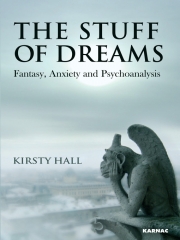
Many texts about anxiety are based either in the philosophical tradition or within the medical model under the guise of discussions about post-traumatic stress disorder. In the case of fantasy, however, the usual sources of discussion are in literary and cultural criticism. Bringing the two together offers the scope for a book with an original theme. The aim throughout is to make technical psychoanalytic ideas easily accessible to the general reader. The balance between clinical ideas, philosophical ideas and literary sources is aimed at keeping both potential audiences interested. Clinicians may find the idea of thinking ‘dialectically’ helpful with their patients. Although this approach is implied in both Freud and Lacan, this is the first book to put dialectics ‘centre stage’ in terms of understanding the patient’s discourse. As far as general readers are concerned, most texts on fantasy do not ‘home in’ on the contribution of anxiety to the constantly changing content of fantasy.
Description
This book offers a new approach to the problem of anxiety. It suggests that our fantasies (both public and private) offer the key to understanding our anxieties and vice versa. If, instead of flopping in front of the latest episode of Star Trek or The Simpsons, we stop to ask ourselves, ‘Why are we watching fantasy on TV?’ then this book provides some answers. The principle sources for understanding the phenomenon of fantasy combined with anxiety are drawn from the worlds of psychoanalysis, literature and popular culture. At times, the book offers clinical examples of fantasy/anxiety interactions; at others, literary or popular cultural sources are preferred. The variety of references endeavours to reflect the chimerical nature of both fantasy and anxiety.
Reviews
‘How can we keep our anxieties from overwhelming us, while at the same time containing the knowledge that our life ends in death, Hall asks. Central to an answer to that dialectical question is the role of fantasy. We need our fantasies, whether they are described in the gothic novel, science fiction, popular TV programmes or religious ritual, to help us with our anxieties, she suggests. However fantasies can also be used to avoid facing the Real. It is here that the psychoanalytic discourse of Freud and Lacan have helped us to understand that we cannot avoid anxiety, that it is indeed part of what it is to lead a life, even though we create elaborate defences against this knowledge. This is an arresting book that brings together ideas from popular culture, literature and psychoanalysis, while addressing deeper philosophical question of the meaning we give to life in the face of the inevitability of death.’ – Prophecy Coles, Psychoanalytic Psychotherapist
‘In my experience, a title like The Stuff of Dreams: Fantasy, Anxiety and Psychoanalysis usually refers to a book treating everyday life in a very complicated way, thus concealing the author’s failure to understand what he or she is writing about. Kirsty Hall’s book is exactly the opposite. Using ordinary language, she demonstrates the importance of our commonplace fantasies and anxieties. Furthermore, she writes very well – reading this book was a genuine pleasure for me. The combination of her clinical experience, cultural references and knowledge of differing psychoanalytic theories becomes more and more a rarity that we have to cherish.’ – Prof. Paul Verhaeghe, PhD; Chair of the Department of Psychoanalysis, University of Ghent, Belgium
Contents
- Introduction
- Variations on a theme of negation
- Other minds, other worlds
- Working without a safety net
- What happens when the plot gets lost
- Gothic tales and other stories
- I believe…
- The meaning of fantasy and anxiety
- Fantasy terminable and interminable
About the Author
Kirsty Hall taught psychoanalysis as a body of theory at Middlesex University and currently teaches both theory and practice on a number of trainings. For a while she was the managing director of Rebus Press, a publishing house whose list reflected her own wide interests. She continues to work in private practice and to write about issues in the field.
by Admin General | Jul 18, 2013
 This book argues that football offers us the possibility of manageable doses of self-elected madness. A madness that is essential for a sane life. For the paradox is that this very madness is simultaneously therapeutic: football as an insistent provocation, repeatedly re-inaugurating the reverie or drift, disrupted by those moments of the most intense fracture, moments of the autistic stare.
In the tradition of Adam Phillips and Darian Leader, Chris Oakley shines his spotlight on the world of football and with wit and erudition looks at the question of why this worldwide preoccupation with Football and does anybody have the answer?
It would appear that football has claws, for the world as we know it, is possessed. Somehow it never lets go, and not merely the sports pages are in danger of being swallowed by its hungry sprawl. For many what is in play is seizure, rapture, demonic possession, frenzy, delirium, in more or less manageable doses. Although of course, just as the effects of the psychoanalytic tie are hardly containable to the classical fifty minute ‘hour’, nor are these football passions bounded by the standard ninety minutes of any particular game. This book argues that football offers us the possibility of manageable doses of self-elected madness – a madness that is essential for a sane life. For the paradox is that this very madness is simultaneously therapeutic: football as an insistent provocation, repeatedly re-inaugurating the reverie or drift, disrupted by those moments of the most intense fracture, moments of the autistic stare.
Proffering a roller-coaster of intense discomfort, anguish ecstasies interspersed with abstracted longings so redolent of the back ward inpatient, forever lurking in the discontinued corridors of our old lunatic asylums. Yet always present, just round the corner, lies the possibility of almost uncontainable happiness, always an abundance, always an overflowing. Simultaneously football provides us with our own utterly personal and yet simultaneously collective, as in programmed, delusional system: a universe organised around the fixtures.
by Admin General | Jul 18, 2013
Beat poet Allen Ginsberg is the subject of this illuminating documentary. Filmed in 1967, at the height of his career, Ah! Sunflower follows Ginsberg to London, where he attends a conference on ‘the demystification of violence’ at Camden’s Roundhouse.
The DVD includes new interviews with Iain Sinclair, Chris Oakley (psychiatrist and Laing associate) and writer Gareth Evans.
Read more about the DVD, or order a copy online.


